Content Menu
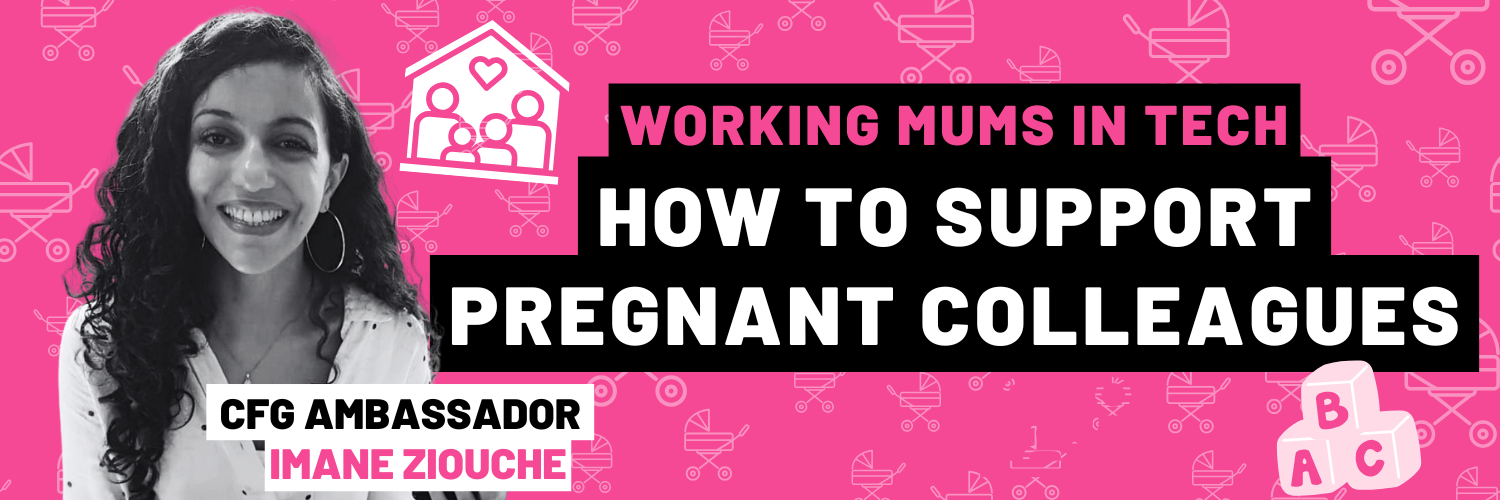
Working Mums in Tech: How to Support Pregnant Colleagues After the Baby Shower
There is a moment that many pregnant women in tech know well. You are sat in a sprint planning meeting, you have been on the team for years, and yet somehow the interesting project – the one everyone knows will be career-defining – gets quietly assigned to someone else. Nobody says anything directly, nobody has to. You smile, you get on with it, and you wonder whether you are imagining things.
I became a mother at the end of 2025, and going through pregnancy as a software engineer gave me a perspective I did not expect. It is not that anyone was unkind, it is that the gap between gestures of support and actual support turned out to be much wider than I had realised.
This piece is for colleagues, managers, and organisations who want to do better. Because most of you do want to, you just might not know where to start.
The Baby Shower Is Not the Finish Line
Let me start by saying: the cards, the gifts, the cake, they all matter. Being celebrated by your team is genuinely lovely.
But celebration is not the same as inclusion, and for a lot of pregnant women in tech, the party is often where the active support ends.
After the bunting comes down, the real experience begins. You are still at your desk, still shipping code, still showing up to every standup, but something has shifted. Decisions get made without you in the room, you are not looped into the new initiative because “it will launch after your leave anyway.”, your name stops coming up in conversations about future projects. None of it is malicious. It is just… assumed.
This gradual sidelining is one of the most common experiences pregnant women in tech describe, and it happens long before maternity leave begins.
The invisible engineer
Think about the last time you saw a visibly pregnant engineer presenting at a conference, leading a high-profile technical project, or being publicly recognised for a significant piece of work. It is rare, is it not?
There is a well-documented pattern of women leaving the tech industry around their mid-thirties – which, for many, coincides precisely with becoming a mother. According to a 2023 report by the Fawcett Society, women in STEM are more likely to leave the industry than their male counterparts, and caring responsibilities are consistently cited as a major factor. The pipeline does not just leak: it is being punctured at a very specific moment.
When you rarely see pregnant women or mothers in senior technical roles, it sends a message, even if no one intended it to, it tells the next generation that motherhood and ambition do not comfortably coexist in this industry. That is a message we need to actively contradict.
What I Wish Had Been Different
Reflecting on my own experience, a few things stand out, not as criticisms, but as genuine observations about the gaps between good intentions and meaningful action.
Being kept in the loop, not just the conversation
There is a difference between being asked how you are feeling and being included in decisions that affect your work. I wanted both. I was often given only the first.
Practical things that would have helped: being explicitly told I was still being considered for opportunities, having conversations about my return pathway before I left, and simply being asked what kind of involvement I wanted during leave, rather than it being assumed I wanted none.
Opportunity protection, not just role protection
Organisations are often legally clear on the basics: your job is protected; your pay is protected. What tends to fall through the cracks is opportunity. The mentorship programme that kicks off while you are on leave, the internal talk series you were going to be part of, the team restructure that repositions your role in a way that quietly reduces its scope.
Genuine support means protecting not just the role, but the trajectory.
A manager who asked rather than assumed
The most powerful thing a manager can do during a pregnancy is ask open questions. Not “are you okay?” but “what would make this period easier for you?” Not “let me know if you need anything” but “here is what I can offer – which of these is actually useful?”
Pregnancy is not a single uniform experience, some people feel capable and energised for most of it. Others are exhausted and uncomfortable from week one. Blanket policies do not account for that variety: individual conversations do.
What Real Support Looks Like
For colleagues, managers, and organisations who want to move beyond the gesture, here are some concrete starting points.
For colleagues
- Keep including them. If you are organising a team lunch, a knowledge share, a hackathon, extend the invite. Let them decide whether they want to join.
- Do not make assumptions about their capacity or ambition. A pregnant colleague can still lead a project, review a pull request, and have opinions about the architecture.
- Check in on them when they return, not just in the first week. The adjustment period is long, and the loneliness of re-entry is real.
For managers
- Have a structured pre-leave conversation that covers more than handover logistics. What are their goals for the year? What opportunities should be earmarked for them on return?
- Keep a record of their contributions while they are out of sight. Performance review cycles have a way of favouring recent memory.
- Offer a genuine return-to-work conversation, not a box-ticking exercise, but a real discussion about what has changed, what they need, and what they want next.
For organisations
- Build flexibility into the system, not just the policy. A policy that says “flexible working is available on request” is not the same as a culture where people actually use it without fear.
- Look at your promotion data, how many women are promoted in the 12 months before or after maternity leave, compared to their peers? The numbers are often uncomfortable to look at.
- Design for motherhood. Not as an edge case, not as a disruption to be managed, but as a predictable and valuable part of a career journey.
A Different Future Is Possible
I think about the engineers who will come after me, the women who are currently doing their Code First Girls course, learning Python for the first time, imagining what a career in tech could look like for them.
I want them to be able to build a career without having to choose between ambition and family. I want them to see pregnant engineers presenting at conferences, leading technical teams, and being promoted. I want them to walk into a team that does not skip a beat when they announce their pregnancy, because the processes, the culture, and the people around them are already set up to handle it well.
That future is not out of reach. But it does require us to move past the baby shower.
It requires us to ask harder questions, have more honest conversations, and hold ourselves – and our organisations – to a higher standard of what support actually means.
If this resonated with you, you are not alone. Code First Girls exists to change who gets to work in tech, and that includes making sure the women who get in, stay in.
If you’d like more stories like this, along with practical insights and opportunities from across our community, you can sign up to our newsletter below.
Imane Ziouche is a software engineer and Code First Girls Ambassador and Assistant Instructor.