
Content Menu
Starting in Tech: from Curiosity to Practical Skills
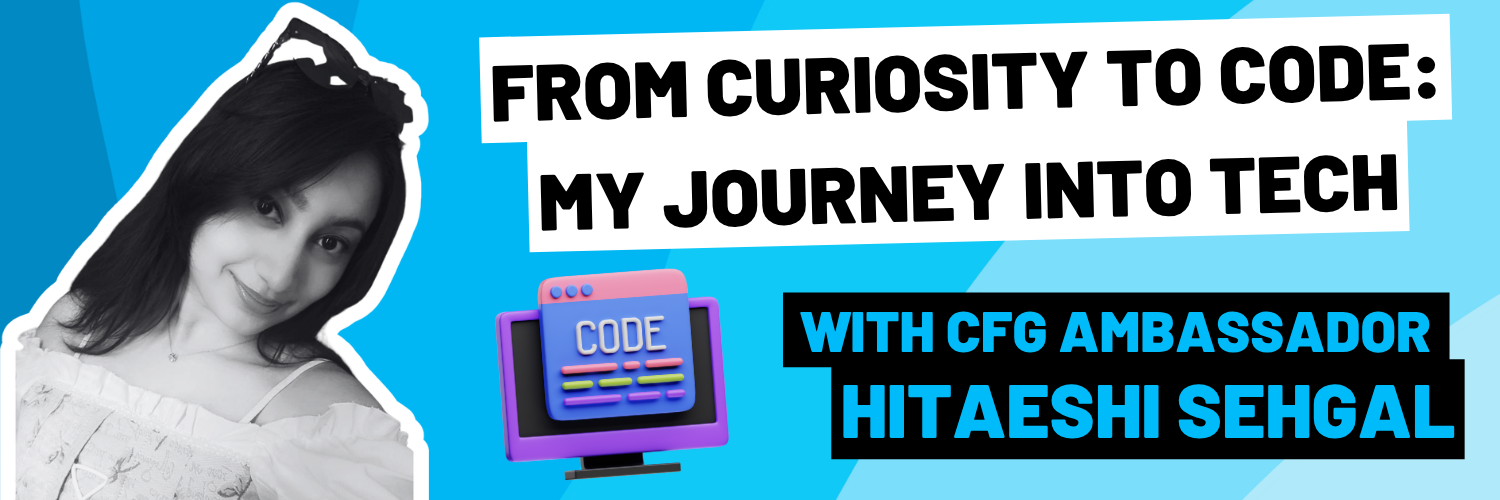
Hi, I’m Hitaeshi Sehgal, a Computer Science student at BITS Pilani and the founder of Ideanix, an AI-driven startup I’m building to explore how technology can solve real, practical problems across data, automation, and business.
While I’m still early in my journey, I’m not waiting to feel ready. I’m actively building, experimenting, and learning by doing, putting in the work to turn ideas into something real. Ideanix is a big part of that journey, where I’m pushing myself to think beyond theory and actually create.
For me, getting into tech was never just about learning concepts. It became about understanding how to use them, build with them, and eventually create something of my own.
A few years ago, if someone had asked me whether I saw myself working in technology, I probably would have hesitated. Tech always seemed like a space filled with people who already knew exactly what they were doing. People who had been coding for years, building systems, and speaking a language I didn’t fully understand yet. I wasn’t sure if I belonged in that world. But curiosity has a funny way of changing things.
What started as a simple interest in understanding how things work, slowly turned into something much bigger. It changed how I approach problems, how I learn new skills, and how I see the role technology plays in shaping the future.
Looking back now, I realize that getting started in tech isn’t about being an expert from day one. It’s about being curious enough to begin and brave enough to keep learning along the way.
When Curiosity Turns Into Possibility
My journey into technology didn’t start with a perfectly planned career path. Like many people looking to get started in tech, I started with questions.
- How do digital systems actually work?
- How do companies use data to make decisions?
- How does technology power the platforms and tools we use every day?
At first, most of my learning was theoretical. I studied concepts like programming, data analysis, and machine learning. I enjoyed learning them, but sometimes it felt like I was collecting pieces of knowledge without fully seeing how they fit together. I understood the ideas. But I still wondered what it would look like to actually use them. And that question stayed with me for a long time.
Growing Up With Expectations
Growing up in India also shaped how I initially thought about careers and education. There is often a strong focus on choosing the “right” path early, doing well academically, and following structured routes that feel safe and predictable. Success is frequently measured by how quickly you fit into those expectations.
While that mindset can create discipline and ambition, it can also make exploration feel risky. For a long time, I felt like I needed to have everything figured out before confidently stepping into a field like technology. But one of the biggest realizations in my journey has been that growth rarely happens when everything feels perfectly certain.
Sometimes the most valuable opportunities come from curiosity, experimentation, and the willingness to try something new even when the path isn’t completely clear. Breaking away from that pressure to have all the answers allowed me to approach technology with a much more open mindset. Instead of worrying about whether I was “ready,” I focused on learning, building, and discovering what interested me.
And that shift made all the difference.
The Moment it Started Making Sense
The real shift happened when I started applying what I was learning to practical situations. Through internships, projects, and collaborative environments, I began to see technology differently. Instead of just learning about systems, I started thinking about how they could solve problems.
I found myself asking questions like:
- How could a process be automated to make work more efficient?
- How could data help people make better decisions?
- How could technology simplify something that currently feels complicated?
Suddenly, technology felt real. It wasn’t just theory anymore. It was a way of thinking.
I started realizing that the most important skill in tech isn’t memorizing tools or languages. It’s learning how to approach problems logically and creatively.
Once that perspective clicked, learning became much more exciting.
Learning Is Messy and That’s Okay
One thing I quickly learned is that growth in technology rarely follows a straight line. Some days things make perfect sense. Other days you spend hours trying to figure out why something isn’t working.
There were moments when I questioned whether I was learning fast enough or whether I truly understood what I was doing. But over time, I began to see those moments differently.
Every challenge was teaching me something valuable. Debugging a problem, revisiting a concept, or experimenting with different solutions helped me build confidence in ways that theoretical learning alone never could.
Technology rewards curiosity and persistence.
Sometimes the breakthrough comes after several attempts. And when it finally clicks, it feels incredibly rewarding.
The Power of Community
Another important part of my journey has been discovering how powerful supportive communities can be. Learning something new can feel intimidating when you try to do it alone. Technology is constantly evolving, and there is always more to explore.
Being part of the Code First Girls community has been incredibly motivating. What makes this community special is the sense of encouragement it creates. People are not just learning individually. They are learning together, sharing experiences, and supporting each other along the way. Seeing people from different backgrounds step into technology with curiosity and determination is inspiring.
It reinforces something I wish more people realized earlier: You don’t need to have everything figured out before you start. You just need to be willing to try.
How My Perspective on Technology Changed
When I first started getting into technology, I thought it was mainly about coding.
Now I see it very differently. Technology is really about solving problems.
It connects to almost every field imaginable. From healthcare research to financial systems to global startups, technology plays a role in shaping how industries evolve and how solutions are built. Once I understood that, my approach to learning changed.
Instead of focusing only on tools, I started focusing on the bigger picture. What problem am I trying to solve? How can technology make that process better?
That shift in perspective made the entire learning journey feel more meaningful.
Advice for Anyone Starting in Tech
If you’re just beginning to explore technology, it’s completely normal to feel uncertain about where to start. The field can seem overwhelming at first, but the most important step is simply beginning.
Here are a few lessons that helped me along the way:
Stay curious. Curiosity is one of the most powerful drivers of learning. Keep asking questions about how things work.
Build things. Even if they’re small. Projects help turn theoretical knowledge into real understanding.
Accept that mistakes are part of the journey. Every developer, analyst, or engineer has experienced moments when something didn’t work. Those moments often lead to the most meaningful learning.
Find a supportive community. Communities like Code First Girls make the journey far less intimidating and far more inspiring.
A Journey That’s Still Unfolding
Looking back, the most valuable part of my journey into tech hasn’t been mastering a specific tool or concept. It has been learning how to think differently.
Technology teaches you to break down complex problems, experiment with solutions, and approach challenges with creativity and resilience. And perhaps the most exciting part is that the journey never really ends.
There is always something new to learn, something new to build, and another problem waiting to be solved.
Conclusion
Starting in technology does not require perfection, experience, or a perfectly planned roadmap. It begins with curiosity.
For me, the shift from theoretical learning to practical problem solving changed everything. It helped me see technology not just as a subject to study, but as a way to create solutions and explore new possibilities.
If you’re considering exploring tech, remember that you don’t need to know everything before you begin. You just need the courage to start. Programmes like the Tech Taster or Coding Kickstarter by Code First Girls can be a great place to take that first step. They create supportive spaces where beginners can explore technology, build confidence, and discover just how many opportunities the tech world offers.
Because every journey into tech starts the same way.
With curiosity.